Field Blogs
Field reflections and research writings from three sites of documentation urban Ahmedabad, rural Banaskantha, and the ancestral homeland in Rajasthan.
The City as a Stage: Ravanhatha in Ahmedabad
When we first encountered Rajubhai Bhopa performing at Pakwan Char Rasta a busy intersection on the Sarkhej-Gandhinagar Highway the contrast was jarring. Here was a man carrying a centuries old musical tradition, surrounded by the noise and anonymity of one of Ahmedabad's most congested traffic corridors. His Ravanhatha, an instrument whose origins are traced to the epic mythology of Ravana himself, competed with the honking of vehicles and the hum of a city perpetually in motion.
Ahmedabad is the final destination of a long migration corridor that brings Bhopa artists from their ancestral villages in Rajasthan and Banaskantha through Khed Brahma into the urban heart of central Gujarat. For families like Rajubhai's, who reside in the Thaltej area, the city is not simply a place to live it is a landscape of performance, survival and identity negotiation.
What struck us most during our fieldwork was how the city functions as a prism, refracting the traditionally unified identity of the Ravanhatha performance into distinct, specialized functions across different venues. At Pakwan Char Rasta, the performance becomes an act of economic survival the audience is fleeting, transactional and anonymous. At Mirch Masala restaurant on C.G. Road, the artist is absorbed into a carefully curated commercial atmosphere, performing for diners seeking a nostalgic, "authentic" North Indian experience. At the Kalyan Pushti Haveli in Vastrapur, the same instrument undergoes a re-sacralization, becoming an offering of devotional service (seva) to an engaged spiritual community. And at the Vastrapur na Mahaganpati temple, it integrates into the celebratory rhythms of neighbourhood life, especially during festivals like Ganesh Chaturthi.
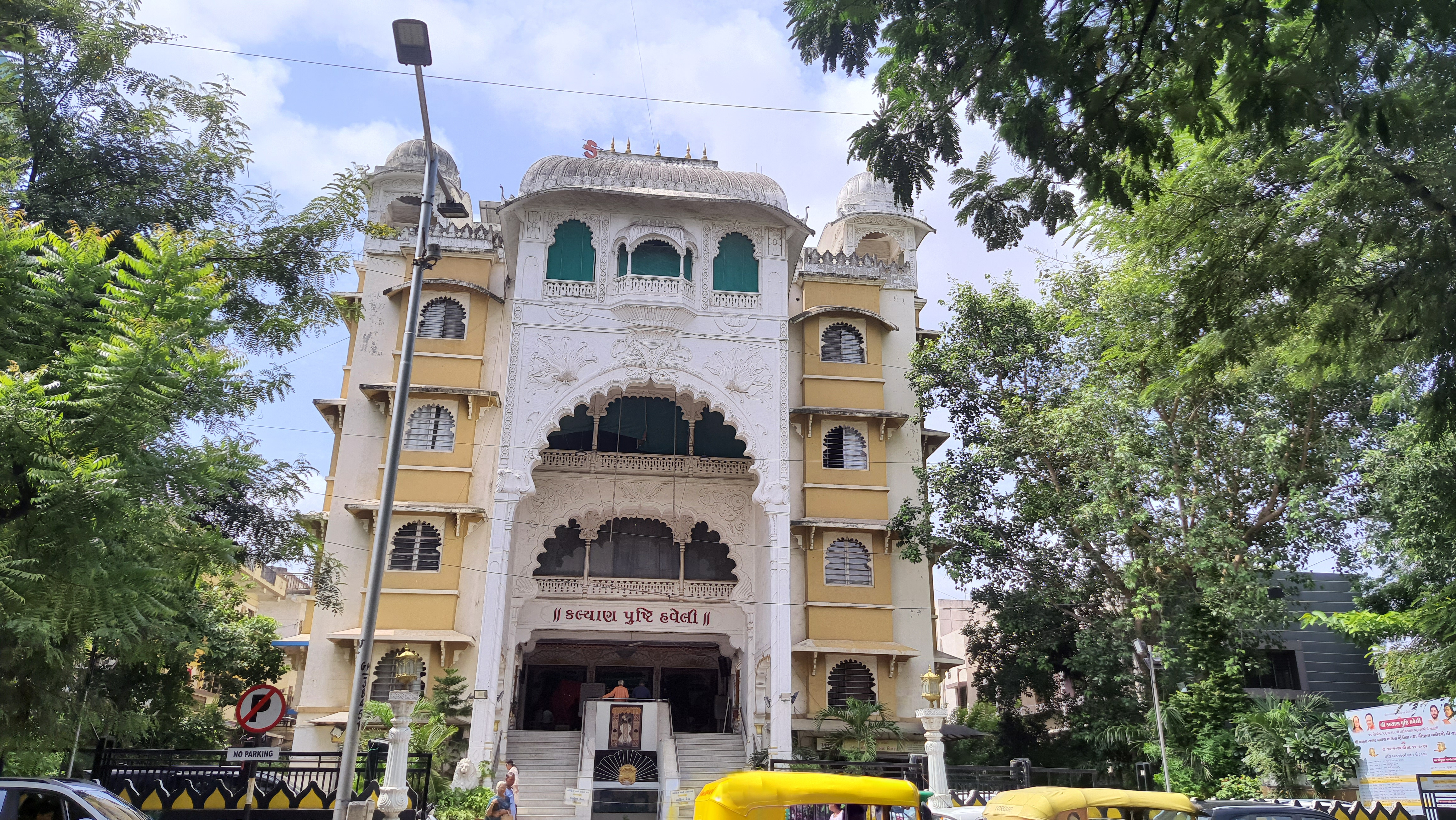
The table below maps the four key performance venues documented during our Ahmedabad fieldwork, analysing the audience, the nature of artist audience interaction, and the primary function the Ravanhatha serves in each context:
| Venue | Venue Type | Audience Profile | Artist–Audience Interaction | Primary Function |
|---|---|---|---|---|
| Pakwan Char Rasta | Public infrastructure; major intersection on SG Highway, national transit corridor | Commuters, drivers; diverse, anonymous and fleeting | Impersonal and transactional; based on charity or brief curiosity | Economic survival; spectacle; maximum but shallow visibility |
| Mirch Masala Restaurant | Commercial enterprise; curated nostalgic environment simulating a dhaba with retro Bollywood theme (est. 1992) | Diners, consumers; seeking a packaged cultural experience | Professional and performative; artist is part of the paid ambiance | Commodified culture; ambiance enhancement; brand reinforcement |
| Kalyan Pushti Haveli | Formal religious institution; sacred space of the Pushtimarg sect, run by Shree Vallabhacharya Kalyan Krupa Trust | Devotees, community members; engaged in a spiritual context | Reverential and communal; performance as a devotional offering (seva) | Spiritual expression; re-sacralization of art; community bonding |
| Vastrapur na Mahaganpati | Community religious site; popular, accessible temple central to local life, especially during festivals | Local residents, festival-goers; broad community cross-section | Participatory and celebratory; integrated into community life | Community engagement; devotional offering; cultural celebration |
What this mapping reveals is not merely the fragmentation of tradition, but also its remarkable adaptability. In a traditional village setting, the sacred, social, aesthetic and economic functions of a Ravanhatha performance would have been seamlessly integrated into a single event. The modern city separates these functions across space and audience yet the tradition persists, navigating each arena with a different strategy. This is not passive decline; it is active negotiation.
Panchha and the Ambaji Belt: The Gujarat Foothold of the Bhopa Community
Our field visit to Panchha, a village in the Danta Taluqa of Banaskantha District, offered an entirely different window into the Ravanhatha tradition than the urban landscape of Ahmedabad. Here, in the shadow of the Aravalli hills and within the devotional orbit of the famous Ambaji shrine, the Bhopa community has established a significant and enduring presence on the Gujarat side of the Rajasthan border.
The proximity of Panchha to Ambaji one of the most important Shakti pilgrimage sites in western India is not coincidental. The devotional economy of the temple town creates both a ready audience and a spiritually resonant context for the Ravanhatha's sacred repertoire. Pilgrims arriving from across Gujarat and Rajasthan carry with them a shared cultural memory that makes the instrument's mythological associations immediately legible. Here, the Ravanhatha does not need to compete for relevance; it belongs.
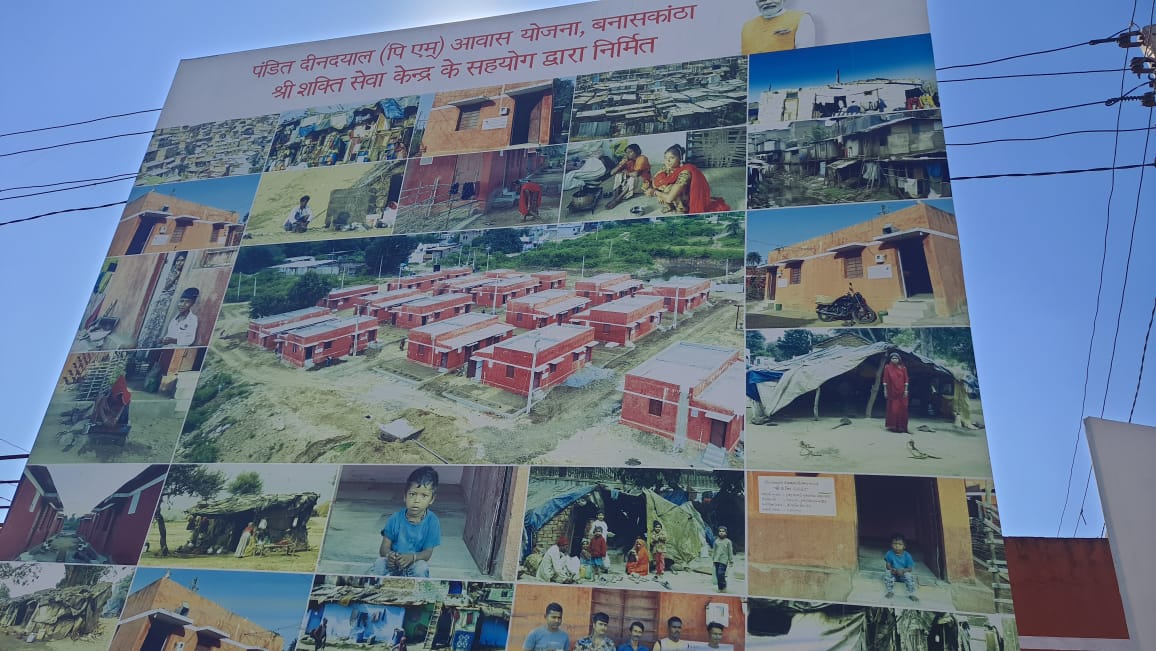
During our visit, we also encountered the work of Shree Shakti Seva Kendra (SSSK), an organisation that has played a transformative role in the lives of Bhopa families in this region. By collaborating with the Gujarat government, SSSK has facilitated the transition of marginalized artist families from makeshift roadside dwellings to permanent structured settlements. This provision of housing what we describe as a "social anchor" fundamentally changes the conditions for cultural transmission. When a family is no longer forced to relocate constantly for daily survival, the familial learning of the Ravanhatha's complex melodies and epic repertoire becomes possible across generations with far greater continuity.
We documented a remarkable range of practitioners across age groups from elders in their eighties and nineties who are living repositories of the oral tradition, to young artists in their twenties who represent the tradition's future. The table below records the practitioners we identified during our field visits, spanning both the Banaskantha and Rajasthan sites:
| Name of Practitioner | Age Group (Approx.) | Generational Role |
|---|---|---|
| Babaji Jogi | ~85–95 | Elder custodian; living repository of the oral tradition |
| Shantilal | ~60–75 | Senior practitioner; cross-generational bridge |
| Bhikharam | ~55–70 | Senior practitioner |
| Rohit | ~35–50 | Mid-generation; active performer |
| Kartik | ~30–45 | Mid-generation; active performer |
| Praveen | ~25–40 | Younger practitioner; potential digital ambassador |
| Madhav | ~25–40 | Younger practitioner |
| Arvind | ~25–40 | Younger practitioner |
| Ramesh | ~40–55 | Mid-generation; active performer |
| Hitesh | ~25–35 | Younger practitioner |
| Mafatlal | ~45–60 | Mid-generation; active performer |
| Mafaram | ~45–60 | Mid-generation; active performer |
| Aakash | ~20–30 | Youth generation; crucial for future transmission |
| Naresh | ~20–30 | Youth generation |
| Bhumaram | ~30–45 | Mid-generation; active performer |
What the Banaskantha visit made clear is that the Gujarat settlements of the Bhopa community are not merely transit points on the road to Ahmedabad. For many families, Panchha and the surrounding villages are home a place where the tradition is lived quietly and continuously, away from the pressures of urban performance. The challenge of institutional support, housing and community consolidation is most acutely felt here, and it is here that the foundation for the tradition's long-term survival must be built.
Sirohi and the Ancestral Villages: Tracing the Roots of the Bharatri
To understand where the Ravanhatha tradition is going, one must first understand where it comes from. Our fieldwork took us to the primary homeland of the Bhopa community District Sirohi, Rajasthan, within the Taluqa of Abu Road. Here, in villages like Revdar, Mandar, Wasan, Bhatana, Mahrol and Padar, the community is known not as Bhopas but as Bharatri, a name that asserts their claimed descent from Bharat of the Ramayana. This is the ancestral geography from which the Ravanhatha tradition emanates.
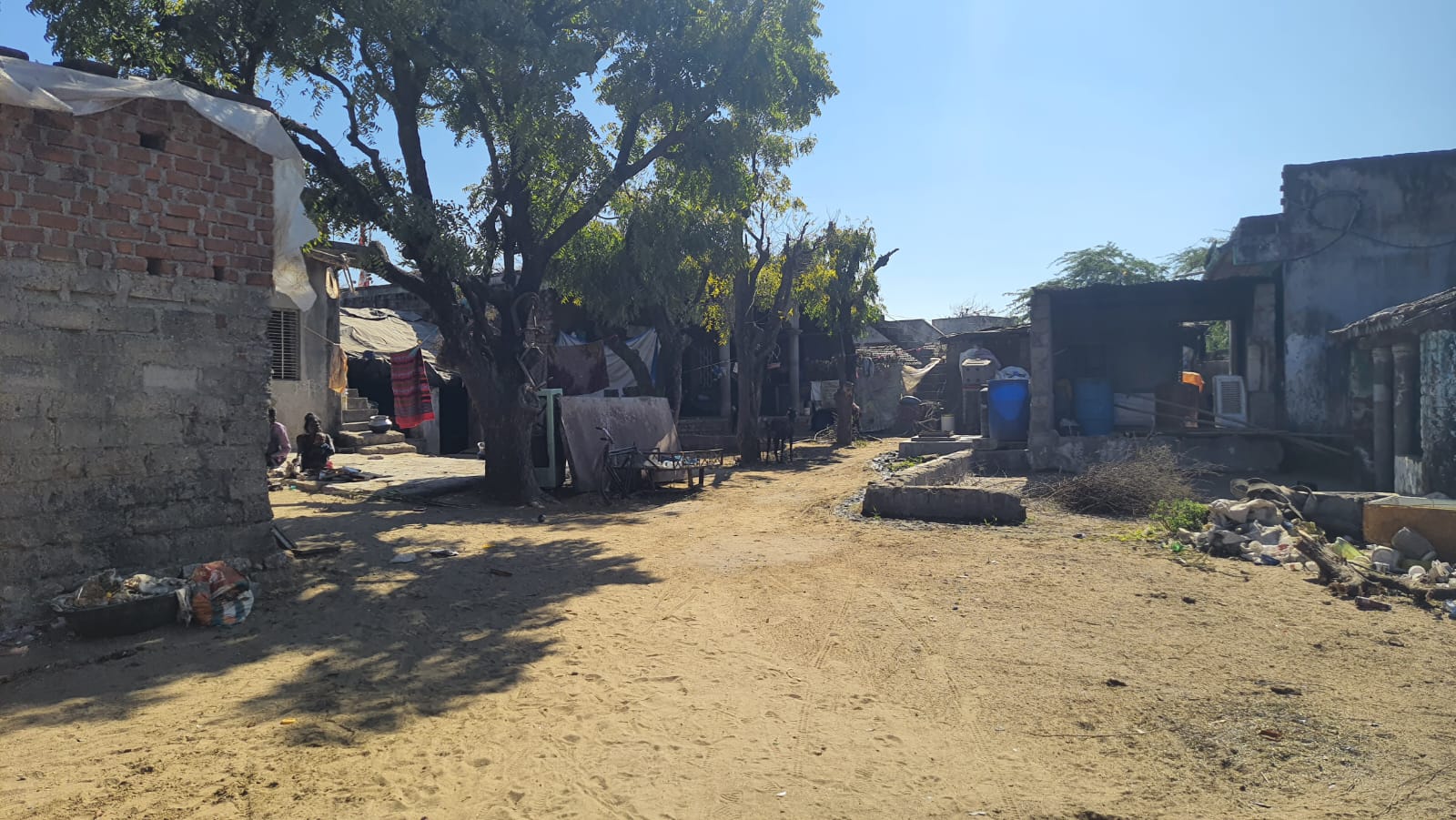
The field visit to Revdar, located near Abu Road, brought us face to face with the conditions in which this tradition has been sustained for generations. These are small, semi-rural settlements where the Ravanhatha is not a performance curated for an outside audience it is simply part of life. The instrument is made, repaired, played and taught within the family, passed from parent to child in the same domestic space where it has been for centuries.
What defines the Bhopa community historically is their itinerancy. They were never sedentary village artisans; they were travelling performer priests who moved from village to village, narrating the epic of Pabuji and other tales from the Ramayana to communities who depended on them as both entertainers and oral historians. This deep-rooted mobility forged over centuries of navigating the rural landscape of Rajasthan is, we argue, the very cultural asset that enables the tradition to survive in the fluid, disorienting environment of a 21st-century city. The historical practice of moving between villages has been transmuted into the modern practice of moving between crossroads, restaurants and temples in Ahmedabad.
Migration from the Sirohi villages follows a well established corridor through Khed Brahma in Banaskantha, near Himmatnagar that channels artists from their ancestral homeland toward the urban centres of central and southern Gujarat. This is not a recent phenomenon driven purely by economic distress. It is a continuation of the community's centuries old itinerant mode of existence, now adapted to the geography of modern states, highways and cities. Understanding the Rajasthani origin is therefore not merely an exercise in historical documentation; it is essential to understanding why the tradition has survived at all.
The geographic analysis below summarises the community's roots, settlement zones, migration corridor and urban destination, tracing the full arc from ancestral village to city stage:
| Geographic Zone | District / Taluqa | Key Villages | Community Identity | Cultural Significance |
|---|---|---|---|---|
| Rajasthan Origin | District: Sirohi Taluqa: Abu Road |
Revdar, Mandar, Wasan, Bhatana, Mahrol, Padar | Bharatri (local name); descendants of Bharat from the Ramayana era | Historical homeland; villages where the tradition has been practised for generations |
| Gujarat Settlement | District: Banaskantha Taluqa: Danta |
Panchha (near the Ambaji shrine) | Bhopas (name used in Gujarat); same community with a Gujarat-side presence around the Ambaji pilgrimage belt | Transitional settlement zone; spiritual alignment with Ambaji temple strengthens the community's devotional identity |
| Migration Corridor | Entry via Khed Brahma (Banaskantha), near Himmatnagar | — | Artists migrate along this corridor, tracing a path from Rajasthan into central Gujarat | Migratory route that channels artists toward Ahmedabad and other urban centres in Gujarat |
| Urban Destination | Ahmedabad (Thaltej area as seen with Rajubhai's family) | — | Artists from the above villages establish themselves in city neighbourhoods, replicating their itinerant performance model in an urban setting | Final stage of migration; site of cultural translation and daily economic negotiation |
Standing in Revdar, it was impossible not to feel the weight of what is at stake. These villages are the source the point from which everything flows. If the tradition loses its connection to this origin, if the younger generation in Sirohi no longer learns the instrument or knows the epic tales, then what travels to Ahmedabad will eventually become hollow. Preservation, therefore, must begin here, at the roots, even as we document the branches that have spread across Gujarat and into the urban landscape of the 21st century.